The
Sovereign’s
Right
God, Cyrus, and the unanswerable God.
God does exactly
what He pleases.
His appointment of Cyrus — a pagan king who did not know Him — to liberate His people is not a failure of divine precision but its clearest proof.
Babylon fell
without a battle.
539 B.C. — the Persians redirected the Euphrates that ran beneath the walls and entered through riverbed gates left unlatched. The Cyrus Cylinder and Nabonidus Chronicle confirm the bloodless fall. Cf. v. 2: “the gates shall not be shut.”
“The LORD of heaven hath given me all the kingdoms of the earth.” Ezra 1:2 — Cyrus’s own decree
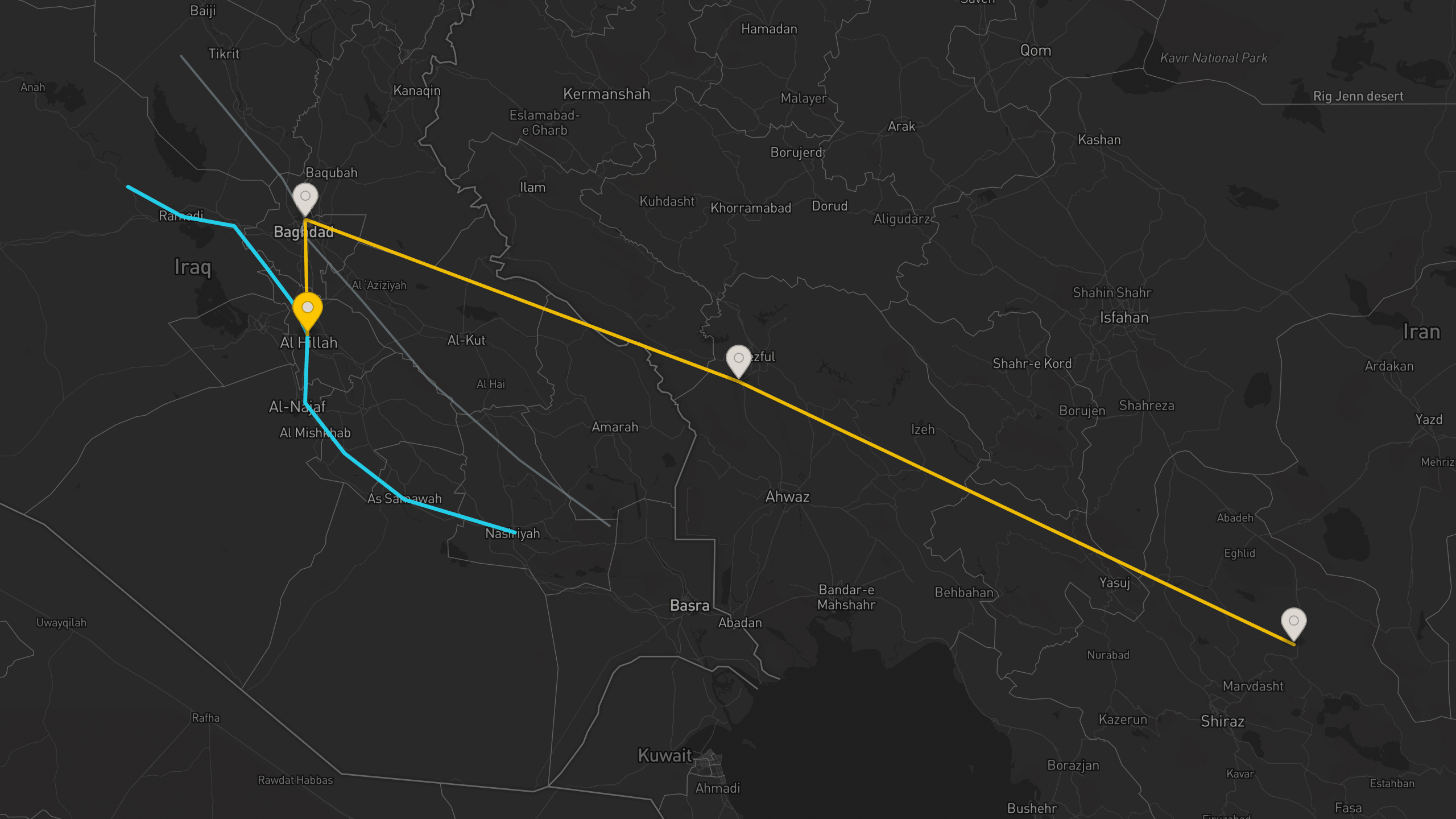
Babylon fell
without a battle.
Cyrus advanced from the Persian heartland — Pasargadae, by way of Susa and Opis — to the city set astride the river he would turn against it.
Four
Movements.
One verdict: there is no God beside Him.
- 01God Commissions the Unlikelyvv. 1–7
- 02God Demands Trust, Not Debatevv. 8–13
- 03God Draws the Nations to Himselfvv. 14–19
- 04God Vindicates the Faithfulvv. 20–25
God commissions
the unlikely.
God names a pagan king before his birth — and equips him as His anointed.
“I will go before thee, and make the crooked places straight.”
“Thus saith the LORD to his anointed, to Cyrus, whose right hand I have holden, to subdue nations before him; and I will loose the loins of kings, to open before him the two leaved gates; and the gates shall not be shut… I will break in pieces the gates of brass, and cut in sunder the bars of iron.”
Seven modes of divine action.
The root of “Messiah” — applied here to Cyrus, a pagan Gentile. It does not make him the Messiah. It signals that God appoints, consecrates, and equips His instruments regardless of their identity.
Sovereignty belongs to God alone — not to any lineage or covenant membership. Cyrus is a type; the ultimate Mashiach, Jesus Christ, is the fulfillment.
“I form the light, and create darkness.”
“I make peace, and create evil: I the LORD do all these things.”
“evil” = ra — calamity, not moral evil. A merism: naming the poles to cover the whole spectrum. Nothing falls outside His jurisdiction.
Cyrus opens gates.
Christ holds the key.
“He that hath the key of David… openeth, and no man shutteth.”Revelation 3:7
“That at the name of Jesus every knee should bow.”Philippians 2:10
Where has God worked through the most unlikely means in your life?
A hard circumstance, an unbelieving person, an unexpected door — what did it teach you about the gap between God’s ways and your expectations?
God demands trust,
not debate.
A woe to the clay that interrogates the Potter.
“Woe unto him that striveth with his Maker!”
“Shall the clay say to him that fashioneth it, What makest thou?… Woe unto him that saith unto his father, What begettest thou? or to the woman, What hast thou brought forth?”
“Ask me.”
The God who forbids the clay to question the potter then invites Israel to inquire. The issue was never silence — it is posture.
Honest faith-questions are welcome. The presumption that His ways must pass our review before we’ll trust them is not.
Where are you tempted to demand an explanation before you’ll trust Him?
What would it look like to bring your complaint honestly — as Habakkuk did — and then wait for His answer rather than demanding justification before you move?
God draws the
nations.
Egypt, Ethiopia, Sheba — the pagan world confesses there is no God beside Him.
Everlasting salvation.
Egypt, Ethiopia, and the Sabeans confess: “Surely God is in thee.” Israel is saved with a salvation that is olam — as permanent as the covenant. The idol-makers go to confusion.
The category is theological, not racial — idolaters are named by their practice, the nations by their representativeness.
Verily thou art a God that hidest thyself, O God of Israel, the Saviour.
How do you square a God who hides Himself with one who keeps saying “there is none else”?
What does it mean to find God through means that conceal Him — and is that your experience of how faith works?
Four Responses.
He has shown Himself, repeatedly. The theophany record alone refutes the objection.
God has been anything but silent or invisible.
Consistent visibility would reduce Him to a physical being — locatable, measurable, exhausted by observation. He is Spirit. The theophanies are accommodations to perception, not revelations of His essential nature.
John 4:24 · Exodus 33:20Creation is self-disclosure — power, intelligence, design, transcendence. The demand for a different kind of visibility is not honesty; it is a refusal of evidence already in hand.
Romans 1:20The Word became flesh — physically present, visible, audible, touchable, for thirty-three years. Witnessed and attested by those who died rather than recant it.
John 1:14 · Col. 1:15 · Heb. 1:3God vindicates
the faithful.
A final court scene — and the widest invitation in Scripture.
Two attributes in apparent tension. A just God punishes; a saving God rescues. How can He be both?
Isaiah plants the tension; the cross resolves it — “just, and the justifier of him which believeth in Jesus” (Rom. 3:26). And yasha is the very root of the name “Jesus.”
“Look unto me, and be ye saved, all the ends of the earth.”
“For I am God, and there is none else… I have sworn by myself… That unto me every knee shall bow, every tongue shall swear.”
The Father's promise.
Before Jesus they bow.
“That unto me every knee shall bow” (Isa. 45:23) is applied by Paul directly to Christ: “at the name of Jesus every knee should bow… and every tongue should confess.”
Verse 22 reduces every religious program to one command: “Look.”
What is it about that command that feels too simple — and what do we tend to add to it?
What the chapter argues.
- 01The exclusive sovereignty of God — “none else” six times
- 02Predictive prophecy as evidence — idols cannot foretell
- 03Divine purpose through unlikely instruments — Cyrus, Pharaoh, the cross
- 04The Creator’s right over His creation — the clay and the Potter
- 05Universal salvation grounded in exclusive deity — one God, one invitation